

1xBet App vs Mobile Site: Which Should You Use?

Anyone opening 1xBet on a phone for the first time hits the same fork in the road: download the app, or just use the browser. Both routes lead to the same sportsbook and the same casino lobby, but the day-to-day experience is not identical. The app tends to load faster once installed and can push live score alerts straight to the lock screen, while the mobile site skips storage and installation entirely and opens in whatever browser is already on the phone. This piece walks through speed, notifications, data use, and updates so the choice is based on how you actually bet, not guesswork.
The Two Ways to Reach 1xBet on a Phone
There are really only two doors into 1xBet from a handset. One is the native app, downloaded as an APK file for Android or through the relevant store listing where available, then installed like any other application. The other is the mobile browser version, reached by typing the address into Chrome, Safari, or any other browser and getting a site that reshapes itself to fit a smaller screen. Both connect to the same account, the same balance, and the same bet slip panel, so switching between them mid-session does not lose any data.
The practical difference shows up in how the phone treats each option. The app sits as an icon on the home screen, keeps some data cached locally, and can run background processes. The browser version treats the platform like any other website, meaning it depends entirely on an active connection and does not keep anything once the tab closes. Neither is objectively wrong, they just suit different habits, and understanding that early saves a lot of second-guessing later in this comparison.
Installing the 1xBet App: What Actually Happens
Setting up the 1xBet app is a short process rather than a technical one. The file is a few tens of megabytes to download, and the installed app then settles at around 100-160 MB depending on the device and any cached images from recent browsing in the Sports tab. Android 5.0 or newer covers the vast majority of phones still in use, so compatibility is rarely the sticking point. The steps are straightforward:
- Download the installation file from the official app page or the link shared in account settings.
- Allow installation from outside the default store, a one-time toggle in phone settings.
- Open the app, log in with the existing account, and confirm the odds format under settings.
The whole thing usually takes a few minutes on a normal connection. After that, the app opens directly to the home screen with Live events already loading, no browser address bar in sight.
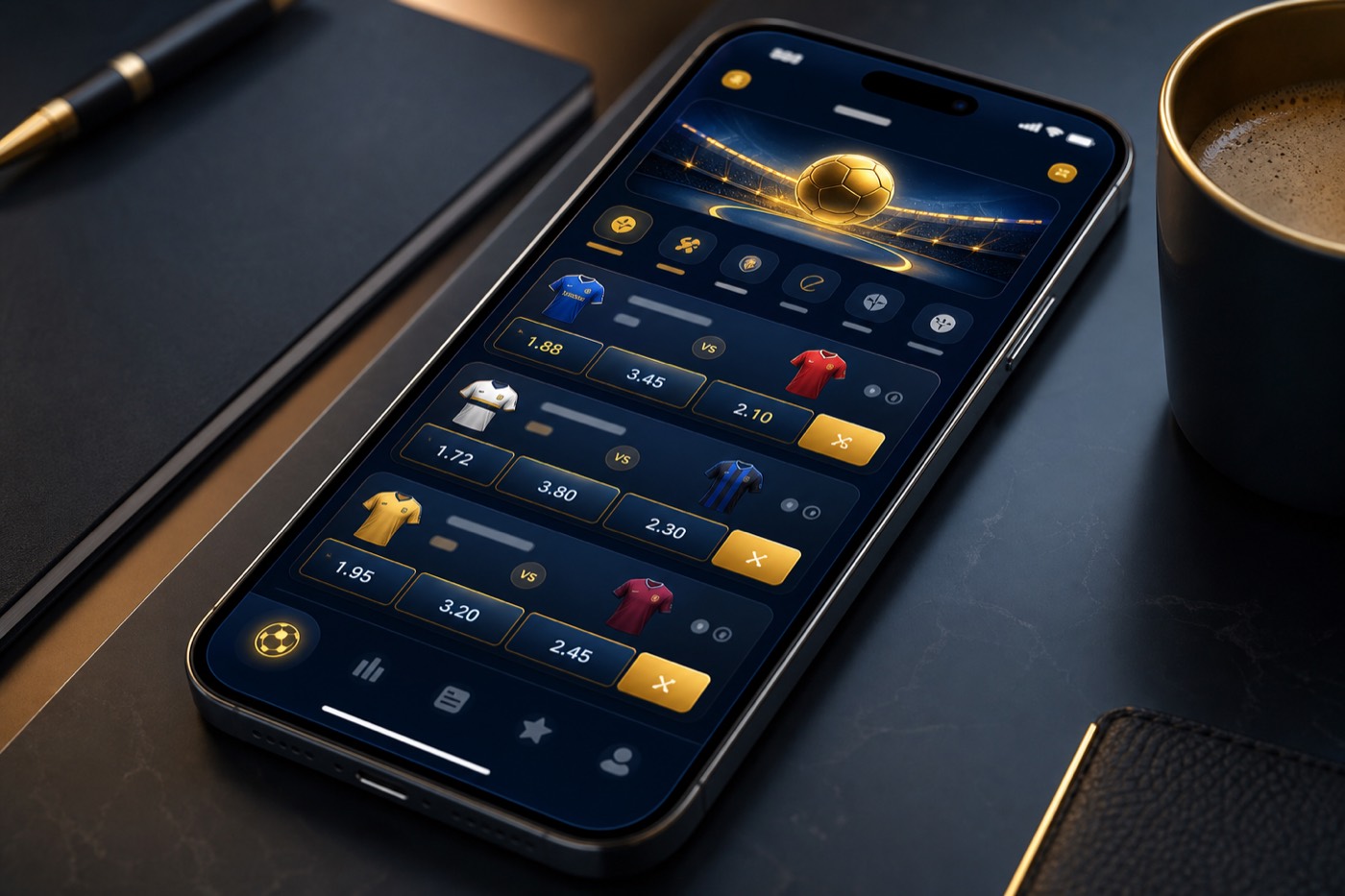
Using the 1xBet Mobile Site Instead
The mobile site skips all of that. Typing the address into a browser brings up a layout built for touchscreens, with the same Sports tab, search bar, and account menu as the desktop version, just rearranged into a single column. There is nothing to install and nothing sitting in storage afterward beyond a small browser cache. For someone using a shared phone, a work device, or a handset that is already low on space, this matters more than any speed difference.
Navigating 1xbet com mobile for betting feels close to using the app once the page has loaded, since menus, filters, and the coupon builder all respond the same way to taps and swipes. The main tradeoff is that every visit starts from a fresh page load rather than a cached shell, so the first screen tends to take longer to appear, especially over a weaker mobile signal. Once loaded, browsing markets and adjusting stakes in the bet slip feels much the same as inside the installed app.
Speed: The 1xBet App vs the Browser in Daily Use
Speed is where the two diverge most noticeably. The installed 1xBet app keeps interface elements, icons, and some recent data cached on the device, so opening it usually shows the home screen within a couple of seconds. Switching between the Sports tab, Live section, and My Account also feels snappier because the app is not re-fetching the entire page layout each time, just the data behind it.
The mobile site has to rebuild each page from scratch on every visit unless the browser has aggressively cached assets, which most phones do not do by default for betting sites. On a strong Wi-Fi connection the difference is barely noticeable, often under a second. On patchy mobile data, especially in crowded areas during a big match, the gap widens and the browser version can lag several seconds behind the app when loading live odds updates. Anyone placing time-sensitive live bets will likely notice this more than someone who checks the coupon a few times a day.
Notifications and Live Alerts
This is arguably the biggest functional gap. The 1xBet app can send push notifications directly to the lock screen for things like a settled bet, a goal in a followed match, or odds movement on a selection sitting in the bet slip. These arrive even when the phone is idle and the app is closed, since the notification service runs independently in the background.
The mobile site cannot do this in the same way. A browser tab that is closed stops receiving anything, and even background tabs are usually paused by the operating system to save battery. Some browsers support web push notifications, but they require extra permissions and tend to be less reliable for live sports updates than a native app notification. For anyone who likes to fire off a quick live bet the moment a market shifts, that difference alone often decides which version they keep using day to day.
Data Use and Storage Space on Your Phone
Data consumption is close between the two once a session is underway in 1xBet, since both are pulling the same odds feeds and match data. The app has a slight edge because cached graphics and layout elements do not need re-downloading each visit, which shaves a modest amount off repeated use over a week. The mobile site redownloads more of the page each time, which adds up on a limited data plan, though the difference per session is usually small, more noticeable over many short visits than in one long one.
Storage tells a clearer story. The installed app takes up that 100-160 MB mentioned earlier and grows slightly as it caches recent activity. The mobile site takes essentially none, aside from whatever the browser stores as general cache, which can be cleared anytime without affecting the account itself.

Updates and Version Changes
The 1xBet app updates on its own schedule, usually with a small notification when a new version is ready, followed by a download that adds new features or fixes odds display quirks. Skipping an update for too long can occasionally cause mismatches with newer promotions or interface tweaks, so it is worth checking for a new build every so often rather than letting it sit for months.
The mobile site never asks for an update because there is nothing to update locally. Every visit pulls the current version of the page directly, so whatever changes the operators make to the Live section or the coupon layout appear immediately for every user, no waiting and no download. This is one area where the browser route is genuinely simpler, since there is no version to fall behind on.
A Quick Side-by-Side Comparison
Sometimes a table makes the choice clearer than paragraphs. Here is how the two options stack up across the areas that matter most day to day.
| Factor | 1xBet App | Mobile Site |
|---|---|---|
| Storage needed | Around 100-160 MB | None, browser cache only |
| Push notifications | Yes, lock screen alerts | Limited or none |
| Load speed after first open | Faster, cached shell | Rebuilds each visit |
| Updates | Manual or prompted download | Automatic, no action needed |
| Best for | Frequent live betting | Occasional or shared-device use |
Which Version Fits Your Betting Habits?
Someone who checks a few results in the evening and places the occasional pre-match wager may never notice the gap between the two. The mobile site handles that pattern fine, opens quickly enough on Wi-Fi, and leaves no trace on the phone afterward. For that kind of casual use, there is no strong reason to install anything at all.
Frequent live bettors, though, tend to gravitate toward the app once they notice the difference in alert speed. Getting a push notification the moment a market shifts, rather than refreshing a browser tab and hoping, changes how quickly a live bet can be placed. Anyone exploring the 1xbet app for the first time usually starts because of that notification behavior rather than storage or design, since the interface itself looks nearly identical between the two versions anyway.
Switching Between the Two Without Losing Anything
One underrated point is that using both is entirely reasonable. The account, balance, and betting history stay synced regardless of which entry point is used, so a bet placed through the browser shows up instantly if the app is opened right after. Some users keep the app installed for match days and rely on the mobile site the rest of the week when the phone is low on storage or borrowed by someone else.
There is no penalty for moving between the two either. Login credentials, saved odds format settings under My Account, and pending bets in the coupon carry over cleanly. This flexibility means the decision does not have to be permanent. Trying the app for a week during a busy sports schedule, then falling back to the mobile site during quieter stretches, is a perfectly normal way to use 1xBet without overthinking the choice.
Final Practical Take
Neither version is a downgrade of the other, they are built for different rhythms. The app rewards regular users with speed, alerts, and a shell that loads instantly, at the cost of some phone storage and the occasional update prompt. The mobile site asks for nothing upfront and works anywhere a browser does, at the cost of slightly slower page loads and no reliable push alerts.
For a first-time user unsure which to pick, a reasonable approach is starting with the mobile site to get familiar with the layout, then installing the app once live betting or notifications start to matter. That way the decision is based on actual usage patterns inside 1xBet rather than a guess made before ever placing a bet.
Does the app cost anything to download?
No, the app itself is a free download, the file just needs a small amount of storage space on the phone once installed. There is no charge tied to installing or opening it.
Can I use the same account on both the app and the mobile site?
Yes, logging in works with the same username and password on either version, and balance, bet history, and settings stay synced between them automatically.
Which option uses less mobile data overall?
The app is slightly lighter over repeated use since it caches layout elements locally, while the mobile site redownloads more per visit. The difference per single session is usually small and only adds up with frequent short visits.
